
How to Choose the Best Shophouse Sustainability Consultant in Singapore
More owners want their shophouses to be cooler, more efficient and ready for the future, without losing the heritage that makes them valuable. That balance is exactly where shophouse sustainability consulting comes in.
A standard green-building consultant may know solar panels and energy audits, but a shophouse is a different kind of building. It may be conserved, it was designed for natural ventilation, and its timber, tiles and plasterwork need careful handling.
This guide explains why shophouses need specialist advice, what separates a great consultant from an average one, and which upgrades are worth assessing first.
Why Shophouses Need Specialist Sustainability Advice
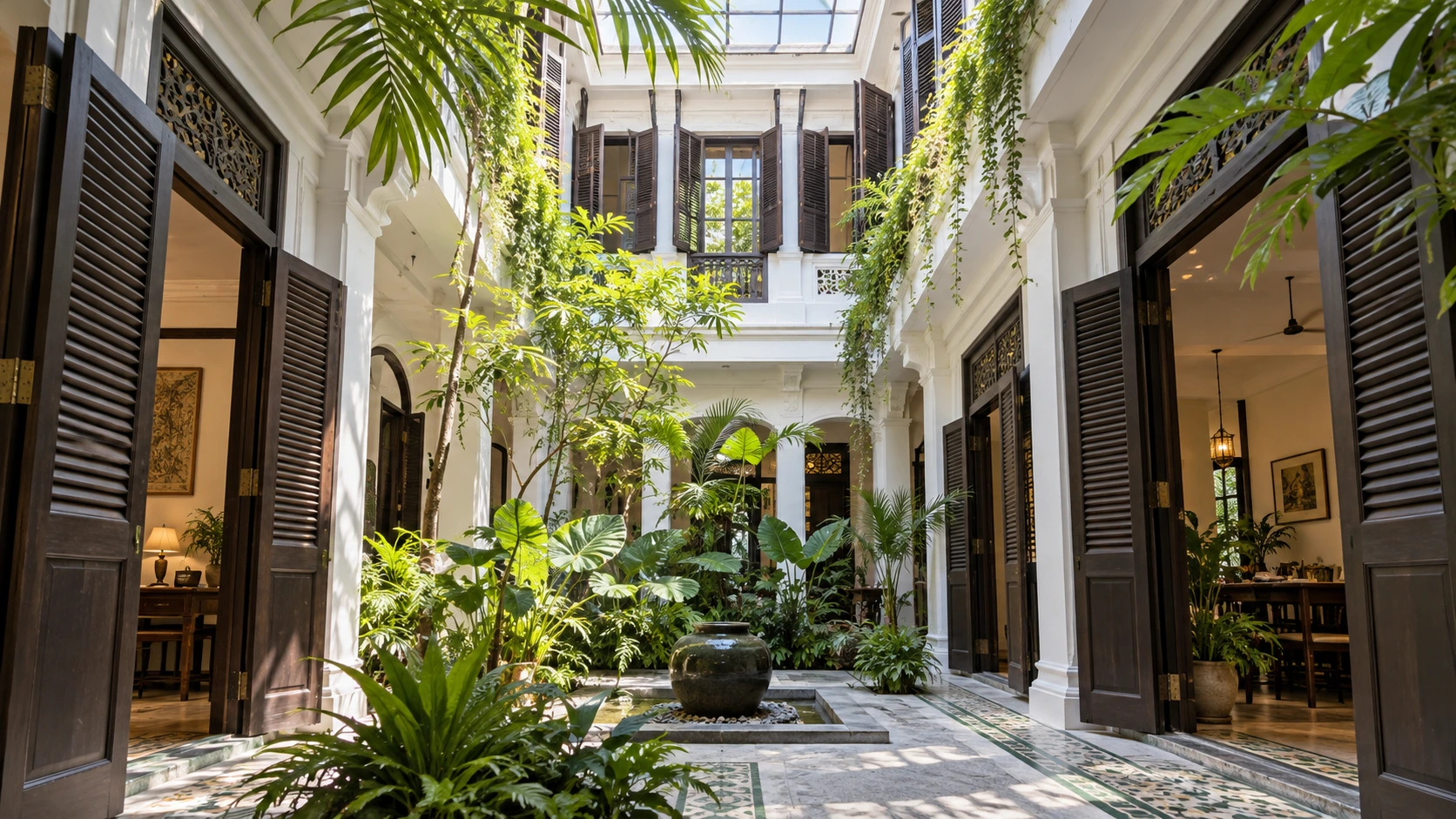
Shophouses were early examples of climate-responsive design. Five-foot ways shade the street front, air wells pull hot air up and out, and tall windows with timber shutters let breezes through. Many later renovations sealed these features off and relied on air-conditioning instead.
A specialist consultant starts by recovering what the building already does well, then adds modern systems only where they suit it. Three factors make this specialist work:
- Conservation rules. Upgrades to a conservation shophouse in Singapore must respect the facade, roof form and other retained elements, so solutions need to be discreet and approved.
- Old building fabric. Timber structures, lime plaster and clay tiles behave differently from modern materials. The wrong intervention can trap moisture or cause damage.
- Embodied carbon. Keeping and reusing existing materials is often the most sustainable choice. Demolishing and replacing has a carbon cost that a good consultant accounts for.

What Makes the Best Shophouse Sustainability Consultant
Look for a partner who brings these qualities:
- Heritage understanding. They know how shophouses were built and what conservation guidelines allow.
- Passive-first thinking. They look at ventilation, shading and daylight before recommending equipment.
- Survey-led recommendations. Every proposal starts with a site survey, not a generic package.
- Practical feasibility checks. They assess roof suitability, electrical capacity and approvals before suggesting solar or EV charging.
- Clear, staged planning. They offer structured shophouse improvement planning, so upgrades happen in a sensible order and fit your budget.
- Joined-up thinking. They consider how upgrades affect tenants, leasing, renovation and long-term value, not just energy savings.
Questions to ask before you hire
- Have you worked with conserved or heritage buildings?
- Will you survey the property before recommending upgrades?
- How do you decide between passive measures and new systems?
- How will you handle conservation approvals?
- Can you help me prioritise upgrades in stages?
- How will we measure performance after the works?
Sustainable Shophouse Upgrades a Good Consultant Should Assess
The right sustainable shophouse upgrades depend on the individual building, but a thorough consultant will look at each of these:
| Upgrade | What it does | What to check first |
|---|---|---|
| Air wells and ceiling fans | Improve natural ventilation and comfort, reducing air-conditioning use | Whether air wells can be reopened or improved |
| Shading and roof insulation | Cut heat gain through the roof and windows | Roof condition and conservation requirements |
| Efficient lighting and controls | Lower energy use and provide useful building data | Existing wiring and how spaces are used |
| Solar panels | Generate renewable energy on site | Roof suitability, orientation and approvals |
| EV charging | Adds charging for owners and tenants | Electrical capacity, parking and access |
| Rainwater reuse | Supplies water for irrigation and cleaning | Roof catchment and storage space |
| Planting and greenery | Cools spaces and supports small habitats | Structural loads, drainage and maintenance |
These measures work best together. Combining them with a shophouse renovation in Singapore is often the most efficient time to install them, since services and finishes are already being upgraded.
See how they fit together in Beam Reality's interactive shophouse upgrades tour.
Why Beam Reality for Shophouse Sustainability
Beam Reality's approach is simple: keep the character, and improve the way the building works. Every proposal begins with a survey, and suitability, scope and approvals are assessed for the individual property.
- Passive design first. Air wells, fans, shading and daylight come before new systems.
- Feasibility for modern systems. Solar, EV charging and water reuse are assessed against the roof, electrical capacity and conservation requirements.
- Ongoing performance. Planting, monitoring and follow-up help the building keep improving after works finish.
- The whole picture. Because Beam Reality also handles listing, maintenance and renovation, upgrades are planned around your tenants, your plans and the property's long-term value.
Want to try it yourself? Build your own upgrade plan with the interactive planner.
Start with a Shophouse Property Consultation
Tell Beam Reality about your building and what you would like to improve. A shophouse property consultation is the first step, and scope and terms are agreed before any work begins.
Frequently Asked Questions
What does a shophouse sustainability consultant do?
They survey the building, identify where it can perform better and plan suitable upgrades, from passive cooling to solar and EV charging, while respecting conservation requirements.
Can a conservation shophouse be made more sustainable?
Yes. Many measures, such as improved ventilation, efficient lighting and discreet services, can work within conservation guidelines. Larger changes need approval.
Where should I start with sustainable upgrades?
Start with a survey and passive measures like ventilation, shading and daylight. Then assess systems such as solar, EV charging and rainwater reuse.
Is it better to upgrade during a renovation?
Often, yes. Installing upgrades while services and finishes are already being replaced can reduce disruption and cost.