Explore sustainable shophouse upgrades in Singapore, from existing fabric and passive cooling to renewable energy and everyday operation. Scroll through the drawing, or choose an upgrade below.
Concept illustrations. Every intervention depends on the property, feasibility and approvals.
How a conservation shophouse is surveyed and upgraded
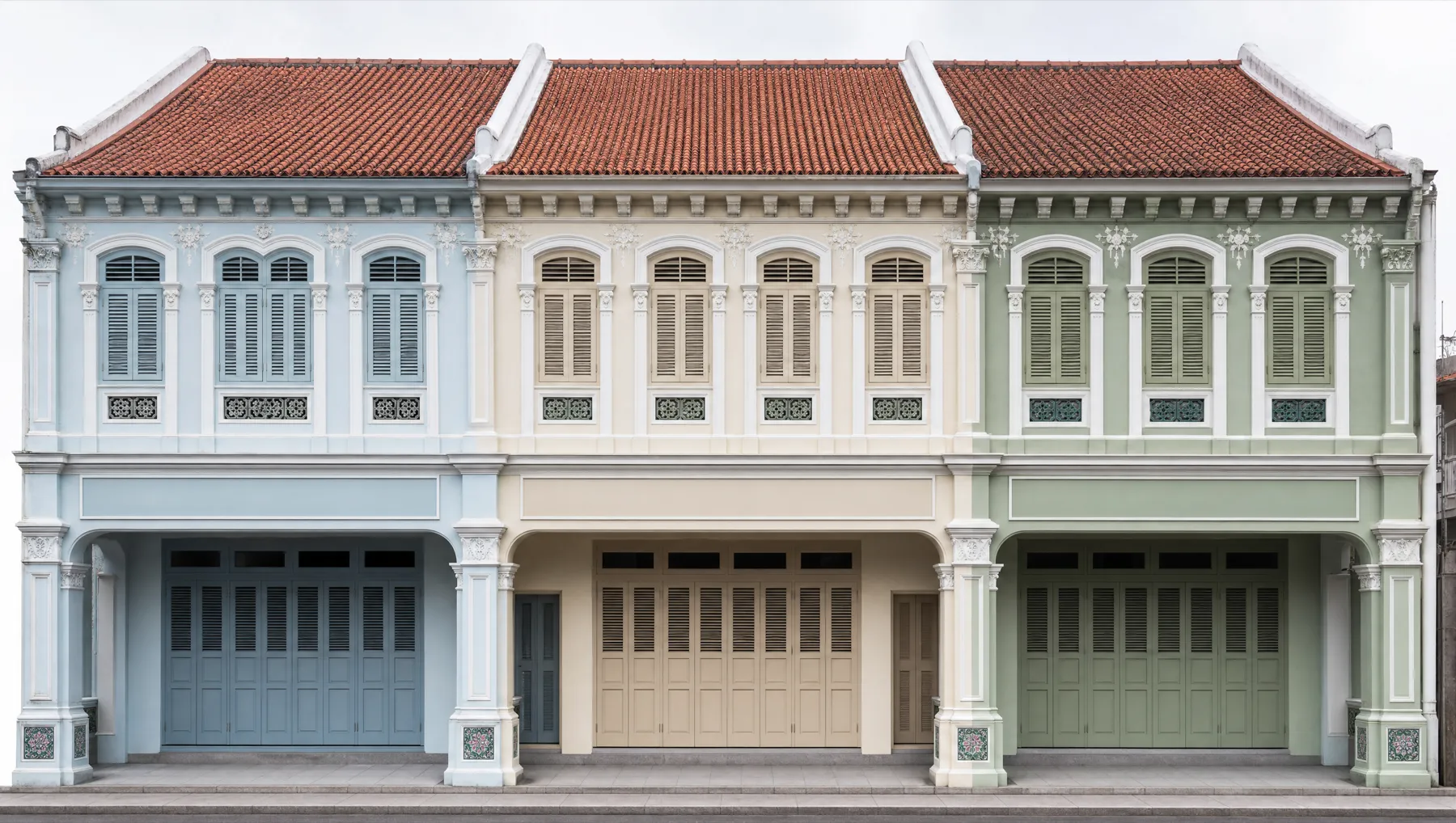
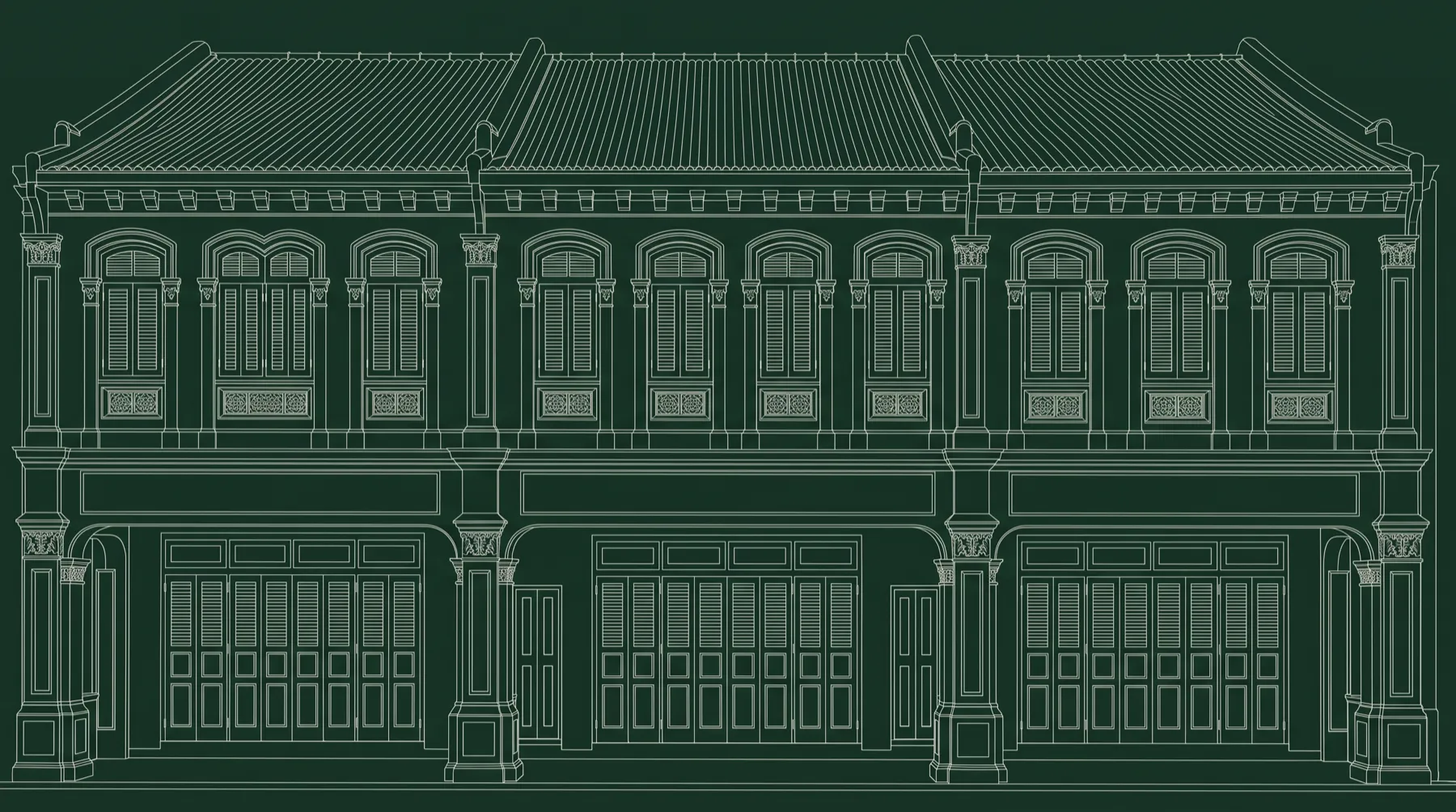
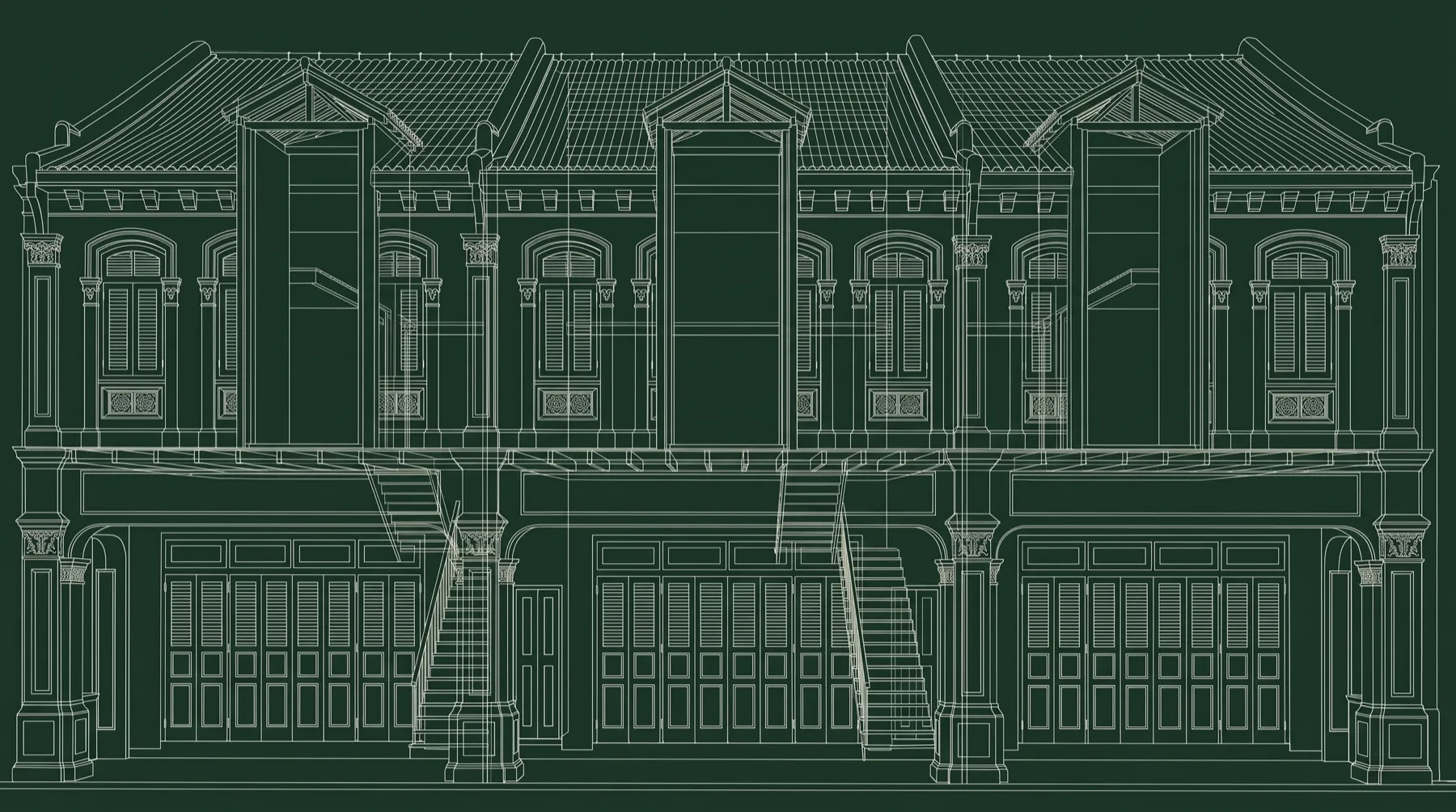
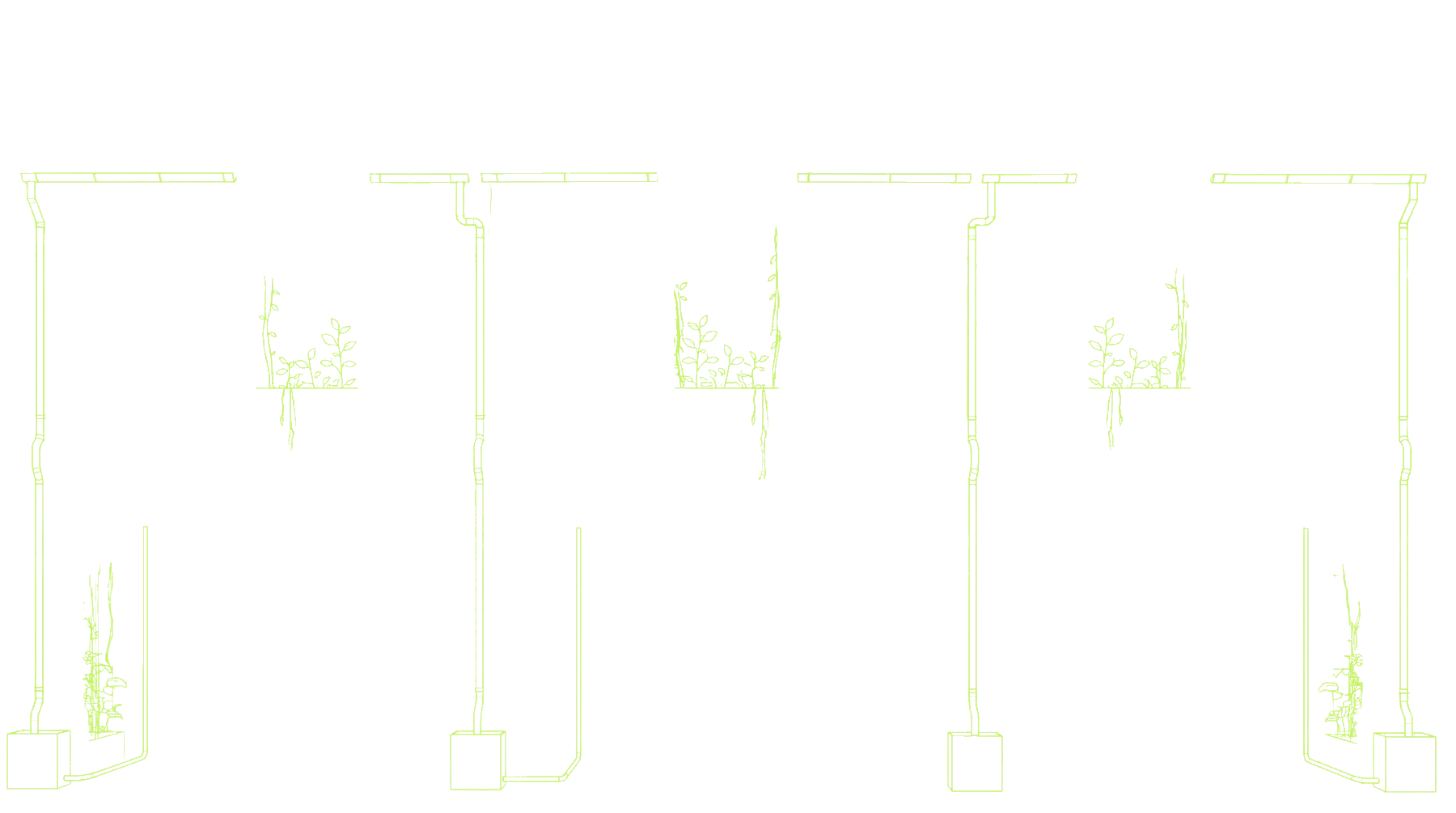
A scroll sequence. A photographed row of three Singapore conservation shophouses dissolves into a measured wireframe elevation, which then becomes transparent to reveal the interior, air wells and roof structure. Five systems are added in the order an adviser would work in: passive ventilation, insulation and fans; rainwater capture and planting; lighting; roof-mounted solar; and electric vehicle charging at the frontage. Each system clears before the next is drawn, and all five return together at the end.
Before01 / 08
Begin with what stands.
Every shophouse has a history. Start with its structure, spaces and existing services to understand what can be retained and improved.
Fabric, roof and age
Services added over time
How the units are tenanted
Survey02 / 08
Read the building.
Record the building as it stands: fabric, layout, services and conservation constraints. Let the survey guide the next decision.
Fabric and roof condition
Existing electrical capacity
Conservation constraints
Reduce demand03 / 08
Start by needing less.
Explore ventilation, shading and insulation before sizing new equipment. The right combination depends on the building and how tenants use it.
Air well and stack ventilation
Roof and ceiling insulation
Fans, shutters and shading
Close the loop04 / 08
Catch what the roof already collects.
Assess rainwater collection, non-potable reuse and planting where space, maintenance and approvals allow.
Rainwater capture and storage
Non-potable reuse and irrigation
Planting in the air well and rear
Improve efficiency05 / 08
Light it for the street and the tenant.
Balance daylight, efficient fittings and controls with tenant comfort, street character and conservation requirements.
LED with occupancy and daylight control
Five-foot-way and facade lighting consent
Warm tone, low glare and spill
Generate06 / 08
Check the potential for solar.
Check roof condition, shading, structural capacity and approvals before considering solar generation.
Structural capacity
Visibility from the street and approvals
Connection, metering and export
Add amenity07 / 08
Plan for EV charging.
Assess EV charging against parking access, electrical capacity, permitted fixings and responsibility for metering.
Incoming supply headroom
Permitted fixing points
Metering and billing owner
The whole asset08 / 08
Plan for the whole building.
Plan improvements together. Each decision affects the next, from reducing demand to selecting systems and managing performance.
The drawing starts the conversation.
A workable plan also considers condition, maintenance, tenants and permissions. Explore the checklist by part of the building.